Limited offerBuild your MVP in 3 days for just USD 1,799
See how it works
 Our own product
LLM Integration in Production - BILL9 Document AI
This is our flagship LLM integration case study. Inside BILL9, our own expense platform, we shipped a production language-model layer that extracts structured fields from receipts, invoices and PDFs and lets business owners query their records in plain English. It is live at getbill9.com on web, iOS and Android, and used by 10+ companies and small businesses.
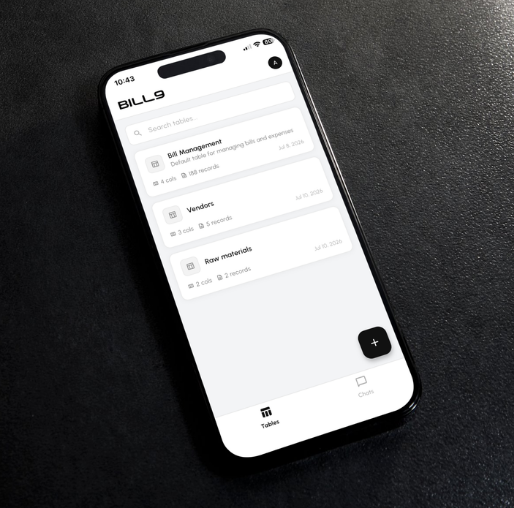
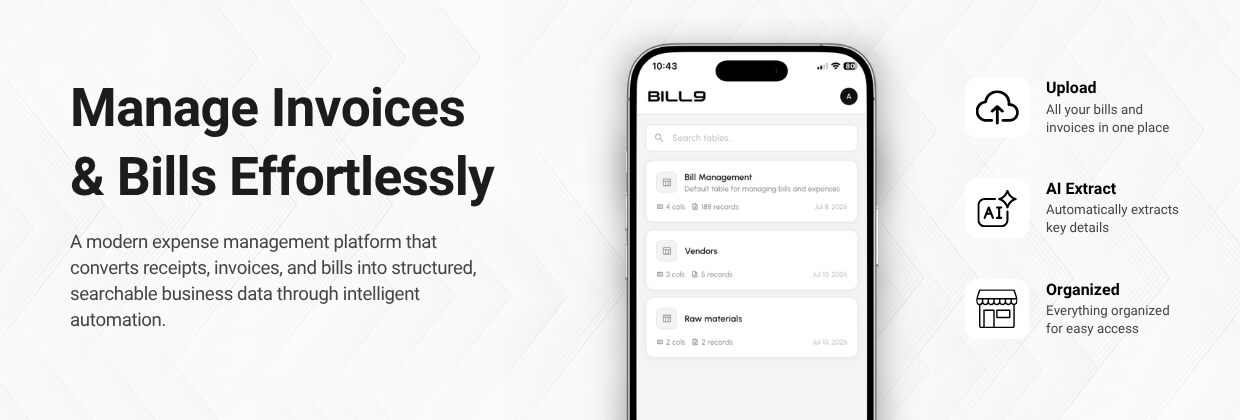
Most teams that ask for "AI" actually need one thing: unstructured documents turned into reliable, structured data they can trust in their books. Small businesses run on paper receipts, WhatsApp photos and inbox PDFs, and month-end becomes a retyping exercise.
BILL9 was our chance to solve that in our own product first, with real users and real accountability, before bringing the same LLM integration approach to client work.
Put a language model into a real financial workflow where the output has to be correct, cheap and fast - not a chatbot bolted onto a dashboard.
- ✓Extract vendor, amount, date, tax and line items from any bill format
- ✓Return typed, schema-validated output instead of free-form text
- ✓Let owners query their records in plain language, grounded in their own data
- ✓Keep per-document cost and latency low enough for everyday use
- ✓Flag low-confidence extractions for human review rather than guessing
- ✓Ship the same experience to web, iOS and Android
The integration follows four steps - upload, extract, structure, ask. A document goes in, the model pulls out every important field into a validated schema, and the result lands in a table the business controls.
Structured output is the core design decision. Rather than asking the model for prose and parsing it, every extraction returns typed fields that are validated before persistence, which is what makes the feature usable for accounting rather than just impressive in a demo.
On top of those records sits a retrieval-grounded chat layer: questions are answered from the organisation's own indexed data, with monitoring on cost and latency per request so the economics hold as document volume grows.
- Days 1-2
Scope the LLM job, not the model
We started from the business outcome - clean, searchable bill records - and defined exactly which fields the model must return and what the fallback is when it cannot. Document samples were collected from real messy inputs: photos, scans and email PDFs.
- Days 3-5
Extraction pipeline
Upload, pre-processing and a structured-output extraction step that returns typed fields rather than free text. Every response is schema-validated before it touches the database, so a bad generation fails loudly instead of corrupting records.
- Days 6-9
Retrieval and natural-language querying
Extracted records are indexed so the chat layer answers questions grounded in the business's own data. Answers are scoped to the organisation's records, so the model summarises what exists instead of inventing figures.
- Days 10-12
Evaluation and guardrails
We ran the pipeline against a held-out set of real documents, measured field-level accuracy, tightened prompts and validation, and added human review for low-confidence extractions.
- Days 13-14
Ship to production
Rollout across web, iOS and Android with cost and latency monitoring per request, so the feature stays economical as volume grows.
Vendor, amount, date, tax and line items are extracted by the model instead of retyped by a person.
Owners ask questions like "what did we spend with this vendor last quarter" instead of building exports.
The LLM layer runs in production for real bills and petty cash, not in a demo environment.
JPG, PNG, PDF and WEBP uploads flow through the same extraction pipeline.
LLM integration, shipped to production
We do this for client products too - document extraction, retrieval-grounded chat, agents and evaluation harnesses, built into your existing stack and shipped, not prototyped.
That builds trust
BILL9 - Turn Bills Into Searchable Business Data
BILL9 is Cogntix's own product - a modern expense management platform that converts receipts, invoices and bills into structured, searchable business data through intelligent automation.
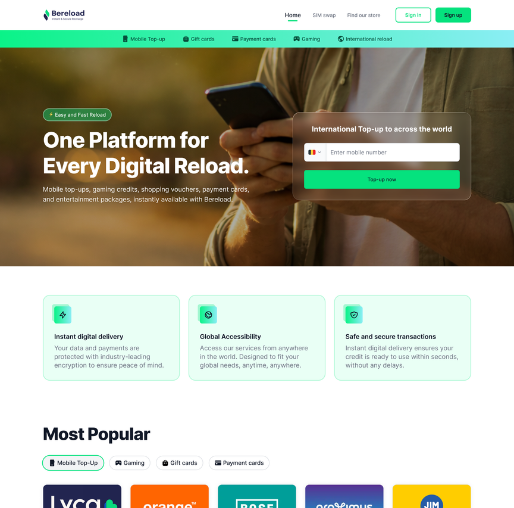
Bereload - Mobile Top-up Platform to Simplify Recharge Process
Milta, a Belgium-based telecom company, approached us with a bold vision to build Bereload, a telecom app that offers the convenience of a real retail store, right from a user's phone.



"Delivered within both the deadline and the budget."



"They genuinely understand the vision and feel like part of our team."





"Hiring got faster the week we switched. The team just shipped."
"Delivered within both the deadline and the budget."
"They genuinely understand the vision and feel like part of our team."
"Hiring got faster the week we switched. The team just shipped."